
The Interview: Joy Hoover
She built nuance in a world of bias, and now is running for US Congress.

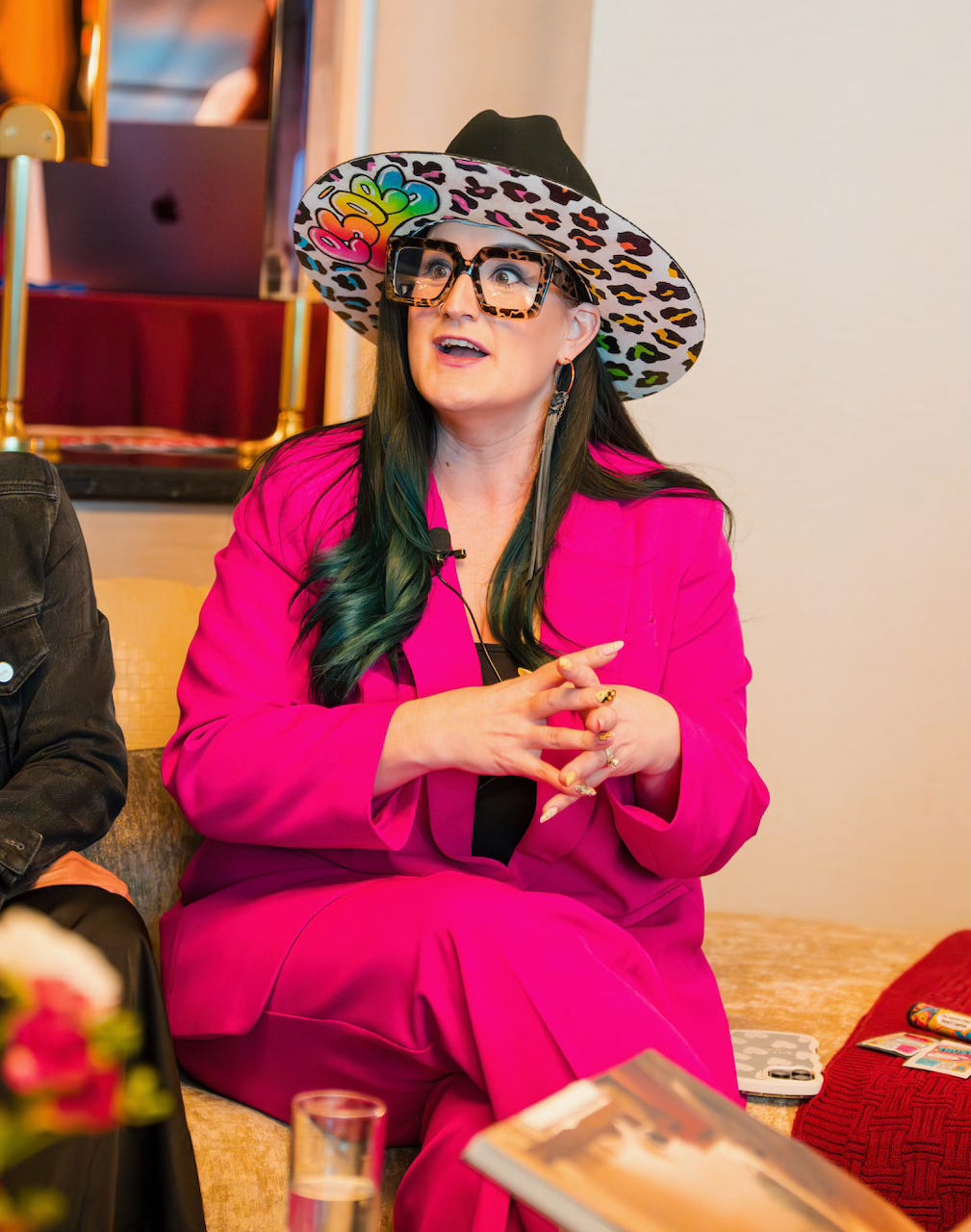
My gut says keep Joy Hoover on your radar. Joy is founder and former executive director of The Cupcake Girls, a nonprofit that supports those in the sex industry. Imagine a world in which sex trafficking is eradicated and consensual sex workers are safe and empowered—that’s The Cupcake Girl’s vision. Joy is also founder of Esōes Cosmetics (pronounced S-O-S), a beauty brand with a purpose: their product line includes “smart lipsticks,” enabled to dial 911 in a crisis. If that weren’t enough, Joy recently announced her candidacy for U.S. representative for Nevada District 01, the seat held by Rep. Dina Titus since 2013. Joy isn’t the type of person to brag about herself, so I will on her behalf: she’s an inspiring leader and a skilled politician. She’s someone people will follow. Read on for more Joy. —Steph

Tell us about yourself.
I was raised in upper Michigan as a fundamentalist evangelical Christian. After I graduated from high school at age 16, I moved to Grand Rapids, the big city, where I met Phil, who is now my husband. We got married at 19 and began to deconstruct the narratives of our childhoods. We moved to California; I went to fashion school. Then 16 years ago, we settled in Las Vegas to support those in the adult industry and anyone experiencing gender-based violence. I was 23 years old—still trying to figure out who I was, and what I believed—but we jumped into serving our new community. Literally, within days of landing in Vegas, I was at the convention center during the adult entertainment expo. I took my makeup kit and planted myself in a restroom, offering to touch up hair, makeup, and lashes for anyone who came in.
That initial experience became the template for our time in Vegas, and it changed the trajectory of my life. We made it a priority to sit with people. We listened to their stories, and I began to see how much we have in common. We’re all human. We have the same fears, the same frustrations. Most of the women I talked to were mothers too. At the time I wasn't a mom yet, but now I am.
I’ve always believed that everyone has a story, and everyone deserves to be heard and supported equally. I say this having listened to thousands of people experiencing homelessness, gender-based violence or trafficking, or who are working in the adult industry, in legal brothels, living in the Vegas tunnels. We visited the tunnels weekly and sat with those who are living under our city—I remember looking up to see Caesars Palace above us.
What I've tried to do with my life is build nuance. If we only see the world through our own perspective, we create biases that really harm others.
You’ve founded a nonprofit and grown social venture companies … why politics? Why now?
Many people encouraged me to run over the years, and I always said no way. (But I never thought I would move to Vegas either, and here we are …)
I founded The Cupcake Girls when I was 23. I had no idea what I was doing in the beginning, and the organization didn’t grow the way many nonprofits do because trafficking wasn’t a topic in the public discourse. There wasn’t much funding to support our mission.
When funds were more readily available, it was often under the condition that victims turn in their traffickers. This is one of the most volatile things you can do, especially if children are involved. As a result, I found myself a public servant. I would be the one to bring diapers to someone whose kid had none. I would be called when someone was thrown down their stairs, pregnant, with no idea where to turn. I helped move women in the middle of the night to get them away from their abusers … I could tell countless stories. The point is, when I considered what it looks like to serve people in office, I thought, well, I've had 16 years of experience. Has it all been in politics? No. But have I learned how to pass legislation? Yes. We passed bipartisan legislation on behalf of trafficking survivors in 2014 when Brian Sandoval was governor of Nevada.
… so in a way, you’ve been working toward this the whole time.
I think so. I was working to advocate for folks and bring resources to our community—healthcare, legal support, childcare, education, career resources—because that’s what was asked of me, and I love this community. Our two children were born in hospitals here. We rented for 11 years, then because of a tax credit were able to buy a home in 2016. When we lost everything in a house fire, we needed Medicaid to fall back on. We had nothing. We're currently rebuilding our lives as I run this campaign, and that's crazy because we tend to think politics are for millionaires. Politics are for the most successful.
The truth is politics are for people who represent people.
There are 788,000 people in the first district—that's a lot—but it would be a privilege to bring their stories to D.C. I feel honored to represent the first district as a 39-year-old, when the average age is 39. Our stories resonate. Twenty-eight percent of East and West Las Vegas residents are faltering on their mortgages, and potentially a third will lose Medicaid. Thirty-five percent are Hispanic and Latino, worried about ICE raids. My kids have spent months worrying about their school friends who are worried about ICE raids.
Who do you look to as role models or inspiration?
I look to Maya Angelou, who was raped at a very young age and did not speak to anyone but her brother for five years. She overcame so much. Then, when she did begin speaking, her words were powerful for generations to come. I love this quote of hers: “Do the best you can until you know better. Then when you know better, do better.” I also look to Gregory Boyle, a Jesuit priest and the founder of Homeboy Industries in Los Angeles, one of the largest gang intervention programs in the US. One of Boyle’s central ideas is that we build a covenant of equals, rather than the “healer” helping the “wounded.”
You have a gift, a skill, for jumping in. You see a problem and engage. Don’t you feel impostor syndrome? What makes you like this?
I definitely do have imposter syndrome. But four years ago I committed that I was going to know who I was, and I was going to believe in myself. I wrote stuff on my mirrors every day, and I repeated truths and affirmations until I really believed them because if I can't do that, how can I be an example for others? It’s important, especially as women, to step into our power. So, while I'm no less afraid than anyone else, I see that courage isn't the absence of fear: it's the absence of self.
We are the ones we've been waiting for. When I considered that—when I looked at this specific seat, and my experiences, the constituents and who my neighbors are, and who I am—I realized it was a perfect fit. I can be confident because I can look in the mirror every day and know that I have led my life with integrity, excellence, and heart, and the desire to truly see people with dignity.
What has your political and spiritual evolution been like for your parents?
We were raised not to talk about politics, yet the values we upheld were political. There were many hard conversations when we first moved to Vegas. It was tough for my parents to see that we were doing the work they taught us to do—with unconditional love.
My dad died skiing in 2017. He was only 67, and he was a really good man. He would visit someone in the hospital at 8 a.m., then preach in church at 9 a.m. Through him, I saw how to live your faith and serve the community. I also saw how the faith tradition I was raised in failed to address violence against women, failed the LGBTQ community, and failed others. Today, Phil and I have built a family and a community of people who are willing to find nuance in their belief systems and in life. I love my relatives, and I have built a family a little differently, and I'm proud of that.
Last question. How do you bolster yourself for the harshness of today’s political climate?
That's a hard question. (It’s exactly what I've been working on, right?) It was probably the scariest thing about politics because my entire career I've dealt with negative feedback and threats. People have said the most vile, horrific things to me, so I’ve had 16 years to thicken my skin. It’s probably alligator thickness now.
That said, I truly believe there’s more alignment than we know. For example, we had adult companies, porn companies, and churches supporting our work at The Cupcake Girls. I love that. We always told funders if you don’t have an agenda for your dollars, we can use them to build resources and support for people.
I was able to bring funders together from across the aisle to listen to the stories of those who needed support, and it changed their lives. Listening to people and learning stories is what changes you. That’s why I do this work.
“Do the best you can until you know better. Then when you know better, do better.”
—Maya Angelou

Support Joy’s campaign with a gift of any size. Donate here.
This interview has been edited for length and clarity.
What an inspiring interview! I love the work that Cupcake Girls have been doing, and 100% think this is a woman we need in office!